
In this post

What the ingredient name describes
The original 2002 paper named the peptide Argireline and gave its sequence as Ac-EEMQRR-NH2. The six letters identify its amino acids. Ac- and -NH2 describe chemical changes at the two ends. FDA researchers later identified acetyl hexapeptide-8 with that same sequence.
The 2002 abstract describes interference with proteins that help cells release chemical signals. It also reports a wrinkle-depth reduction of up to 30% after 30 days in healthy women. The abstract does not provide enough detail to establish a typical result or compare finished serums.
How strong is the evidence? This is an original laboratory and human-study report, read here through its abstract. A proposed cell mechanism alone cannot establish the same effect in living facial skin.
What the four-week wrinkle trial measured
A 2013 trial enrolled 60 Chinese participants with wrinkles around their eyes. They were assigned by chance to Argireline or an inactive comparison product, called placebo, in a 3:1 ratio. Researchers used appearance ratings and casts of the skin surface to assess changes over four weeks.
The abstract reports an overall anti-wrinkle efficacy figure of 48.9% for Argireline and 0% for placebo in the subjective assessment. It also reports lower skin-roughness measurements in the Argireline group. The abstract does not define that efficacy figure well enough to call it an average 48.9% reduction in wrinkle depth.
How strong is the evidence? A controlled study in people supports a short-term finding for its tested product. The full methods and funding record were not checked for this post. The abstract cannot establish every serum's result, a lasting effect or a complete safety profile.
What the smaller eight-week study adds
A 2023 trial studied 21 Indonesian women aged 26 to 55 for eight weeks. Seven received a cream named acetylhexapeptide-3 in the paper. Seven received palmitoyl pentapeptide-4 cream, and seven received placebo. The paper gives the acetyl peptide the same sequence described above.
The study measured skin moisture, water loss, stretch and wrinkle ratings. Some photographs and average wrinkle scores improved, including in the placebo group. The reported statistical tests did not meet the study's chosen cutoff for a clear finding. These results leave a reliable wrinkle benefit uncertain.
No serious adverse events were reported. The acetyl-peptide group reported symptoms including itching, stinging and burning; the placebo group also reported symptoms. The paper lists financial support from Paragon Technology and Innovation. How strong is the evidence? Seven people per group over eight weeks cannot settle lasting benefit or uncommon harms.
What the skin-penetration test can explain
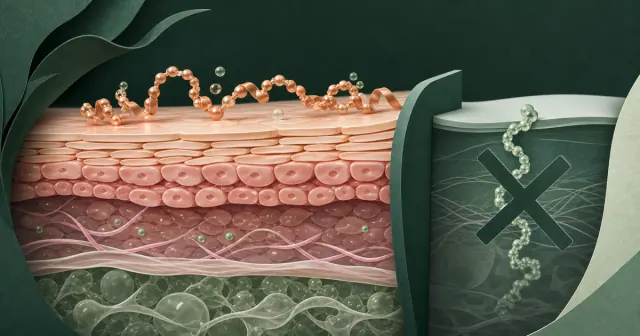
FDA researchers tested acetyl hexapeptide-8 in a cream with oil dispersed in water. They used human cadaver skin and hairless guinea pig skin in laboratory chambers. After 24 hours, most of the peptide was washed from the surface.
In human skin, 0.22% of the applied amount remained in the outermost barrier, called the stratum corneum. After that barrier was removed, 0.01% was found in the remaining outer skin layer, called the epidermis. No peptide was detected in the deeper layer, called the dermis, or the liquid beneath the samples.
These findings cover that formula and laboratory method. They cannot establish every formula's penetration or prove that all wrinkle effects are impossible. How strong is the evidence? This was a laboratory penetration test. It did not compare wrinkle treatments in living participants or establish that a cream acts like an injected medicine.
How to check an Argireline claim
Consider a hypothetical serum that cites the 2013 paper and promises 48.9% shallower wrinkles. The paper's abstract reports an overall subjective efficacy figure. It does not establish that particular depth change or the hypothetical serum's result. The product, measurement and study duration each need to match.
For a real claim, compare the ingredient and finished formula with the original paper. Then check the participants, comparison group, measured outcome and duration. The records above cover selected studies, rather than every Argireline trial. They do not identify a best product or a skin-care routine.
FDA says cosmetics generally reach the market without its premarket approval. Making lines look less noticeable through moisture is a cosmetic claim. Claims to remove wrinkles or change skin structure can make a product a drug or medical device. A cosmetic label alone does not establish FDA approval or a measured wrinkle benefit.
Common questions
Does the skin study prove that no Argireline cream can work?
No. The study tested one formula on removed skin for 24 hours. Its findings limit penetration claims for those conditions. They cannot establish the result of every formula or replace a controlled wrinkle study in people.
The sources below are the record for this post. It was not independently medically reviewed, and it does not diagnose, prescribe, or recommend treatment.
Sources (6)
Read next
Peptides for skin: do creams and serums work?
Learn what human studies show about peptide skin creams, collagen supplements, afamelanotide, GHK-Cu, and injection claims. See where the evidence stops.

What are peptides?
What peptides are, what they may do, safety limits, uses, and product details.
Photos: Kindel Media / Pexels (Pexels License)